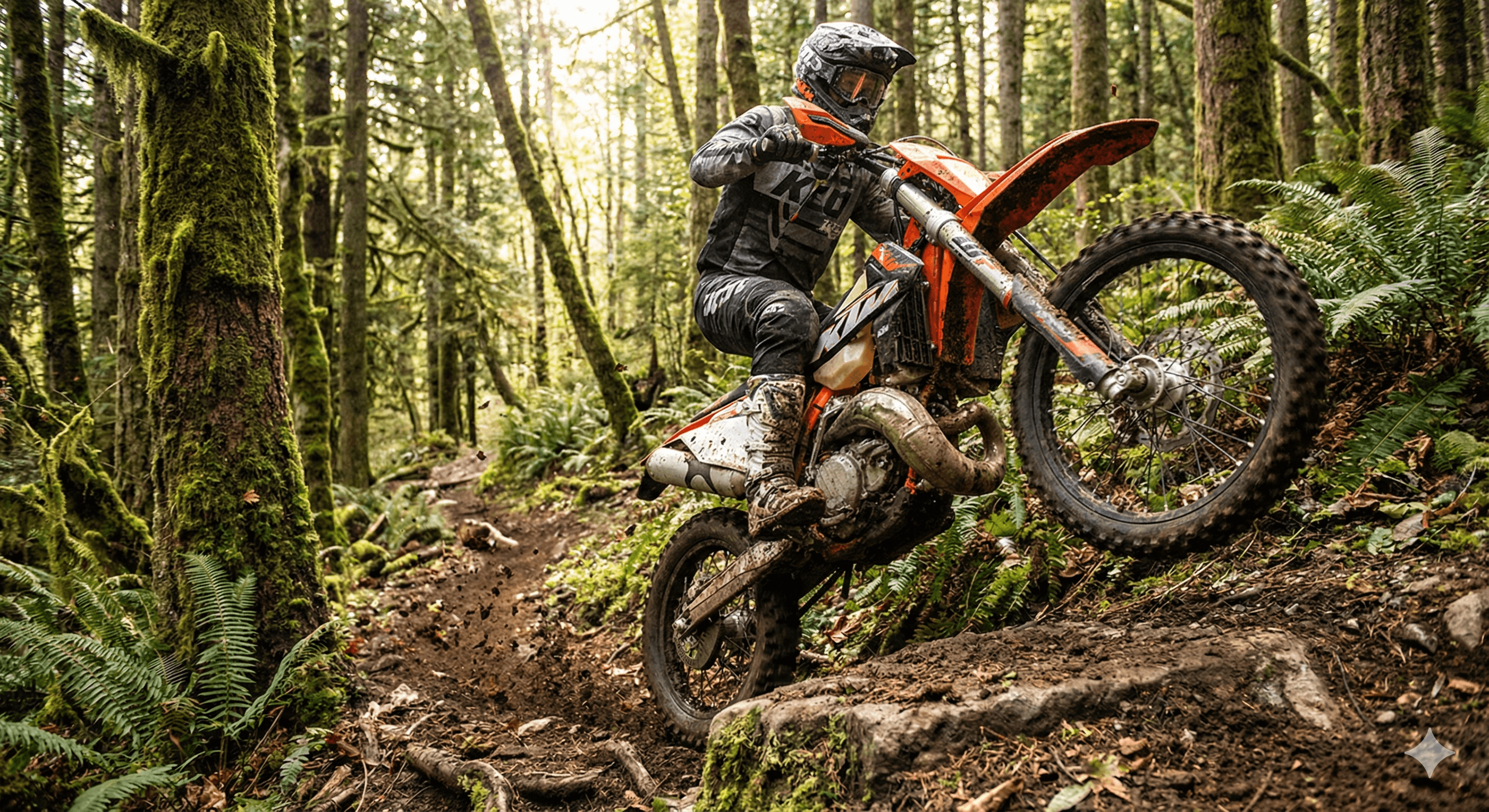
The Complete Enduro Dirt Bike Maintenance Guide

Dec 8, 2025

Hour-by-hour maintenance that keeps you on the trail and out of the shop

We've all been there. You're loading up Friday afternoon, ready for a weekend on the trails, and that nagging thought hits: When did I last change the oil? Was it 8 hours ago or 18?

Dirt bike maintenance isn't complicated. But keeping track of it? That's where things get messy. Scattered notes, forgotten intervals, and that sinking feeling when something breaks because you missed a simple service.

This guide breaks down everything you need to know about maintaining your enduro or trail bike. We've organized it by riding hours because that's how maintenance actually works in the real world. Whether you just bought your first bike or you've been riding for decades, you'll find what you need here.

Let's keep you riding.

What's Inside

  • Every Ride: The 5-Minute Routine

  • Every 10-15 Hours: The Basics

  • Every 25-50 Hours: Going Deeper

  • Every 50-100 Hours: The Big Stuff

  • Seasonal: Storage and Startup

  • 2-Stroke Specific Maintenance

  • Your Maintenance Schedule

Every Ride: The 5-Minute Routine

Before you fire up the engine, take five minutes. This isn't about being obsessive. It's about catching small problems before they strand you 20 miles from the truck.

Pre-Ride Checklist

Fuel: Check your level and make sure it's fresh. Gas that's been sitting more than a week can cause starting issues, especially in carbureted bikes. If your bike's been sitting, drain the float bowl or run the carb dry before storage next time.

Oil level: Use the sight glass or dipstick with the bike upright on level ground. Low oil is the fastest way to destroy an engine. Takes 30 seconds to check.

Coolant: Check the overflow bottle when the engine is cold. If it's consistently low, you've got a leak somewhere that needs attention before it leaves you overheated on a climb.

Chain tension: Push up on the chain at the midpoint between sprockets. You want about 2-3 fingers of vertical slack, roughly 25-35mm. Too tight stresses your transmission bearings and can snap the chain. Too loose risks it jumping off and damaging your cases.

Tire pressure: This changes based on terrain. Start around 12 PSI for most conditions, drop to 8-10 PSI for soft terrain or technical trails, and bump up to 14-16 PSI for rocky sections where pinch flats are a concern.

Spokes: Grab a spoke wrench and tap around the wheel. Loose spokes sound dull; tight ones ring. This takes 60 seconds and prevents the kind of wheel damage that ends a ride early.

Controls: Twist the throttle and let go. It should snap back instantly. If it sticks or returns slowly, your cable needs attention. Squeeze the brake levers and make sure they feel firm with good engagement.

Post-Ride: The Part Most Riders Skip

Pre-Ride Checklist

Fuel: Check your level and make sure it's fresh. Gas that's been sitting more than a week can cause starting issues, especially in carbureted bikes. If your bike's been sitting, drain the float bowl or run the carb dry before storage next time.

Oil level: Use the sight glass or dipstick with the bike upright on level ground. Low oil is the fastest way to destroy an engine. Takes 30 seconds to check.

Coolant: Check the overflow bottle when the engine is cold. If it's consistently low, you've got a leak somewhere that needs attention before it leaves you overheated on a climb.

Chain tension: Push up on the chain at the midpoint between sprockets. You want about 2-3 fingers of vertical slack, roughly 25-35mm. Too tight stresses your transmission bearings and can snap the chain. Too loose risks it jumping off and damaging your cases.

Tire pressure: This changes based on terrain. Start around 12 PSI for most conditions, drop to 8-10 PSI for soft terrain or technical trails, and bump up to 14-16 PSI for rocky sections where pinch flats are a concern.

Spokes: Grab a spoke wrench and tap around the wheel. Loose spokes sound dull; tight ones ring. This takes 60 seconds and prevents the kind of wheel damage that ends a ride early.

Controls: Twist the throttle and let go. It should snap back instantly. If it sticks or returns slowly, your cable needs attention. Squeeze the brake levers and make sure they feel firm with good engagement.

Post-Ride: The Part Most Riders Skip

Here's a truth nobody wants to hear: washing your bike is the single most important maintenance task you can do. And it's the one riders skip most often.

Mud left overnight accelerates wear on every component it touches. Chain, sprockets, bearings, linkage, controls. All of it degrades faster when caked in grit.

Keep your pressure washer under 3,000 PSI and hold the nozzle 2-3 feet from surfaces. Avoid blasting directly at bearings, seals, and electrical connections. After washing, dry everything with compressed air, especially around the chain and brake rotors.

While the chain is still warm, clean it with a quality chain cleaner and brush, then apply lube to the inner rollers while slowly rotating the rear wheel. Pull your air filter for cleaning. Log your hours.

This post-ride routine takes 20 minutes. It saves you hours of repairs and hundreds of dollars in parts over a season.

Every 10-15 Hours: The Basics

This is where most of your regular maintenance happens. If you ride every weekend, you're looking at these tasks roughly every month or two during riding season.

Engine Oil: The #1 Priority

Oil change frequency is the most debated topic in dirt bike forums. Everyone has opinions. Here's what actually matters: follow manufacturer recommendations as a baseline, pay attention to oil condition, and adjust based on your riding style.

For 4-stroke enduro bikes, manufacturer recommendations typically call for oil changes every 10-15 hours. Many recreational trail riders using quality synthetic oil extend this to 15-25 hours without issues, especially in cleaner riding conditions. If you're racing, riding in dusty or sandy conditions, or frequently at high RPM, stick closer to the 10-hour mark. Two-stroke transmission oil follows similar intervals.

The brand matters less than consistency. Use any quality oil with JASO MA or MA2 certification for wet clutch compatibility. When you drain the oil, look at it. Dark and gritty means you pushed it too far. Excessive clutch fiber particles floating in it signals clutch wear that needs attention.

Change the oil filter at every oil change or every other change at minimum. A clogged filter restricts flow and defeats the purpose of fresh oil.

Air Filter: Your Engine's First Defense

Clean your air filter after every ride in dusty conditions, or every 2-3 rides in cleaner environments. A clogged filter chokes your engine and hurts performance. A damaged filter lets dirt straight into your cylinder. Neither is good.

Smart riders keep 3-4 filters in rotation. Swap in a clean one after each ride, then batch clean them all at once. This takes the friction out of post-ride maintenance.

Use a quality air filter cleaner and let filters dry completely before re-oiling. Apply filter oil evenly, massage it in, and let excess drip off before installing. Over-oiled filters can restrict airflow; under-oiled filters don't catch fine particles.

Chain and Sprockets: Daily Attention Pays Off

Beyond the pre-ride tension check, give your chain a proper cleaning every 5-10 hours. Use a chain-specific cleaner (especially important for O-ring chains, where the wrong solvent damages seals) and a dedicated brush.

Inspect sprocket teeth for hooking or shark-fin wear patterns. If you can pull the chain away from the rear sprocket and expose half a tooth or more, it's replacement time. Always replace chain and sprockets together. A new chain on worn sprockets accelerates wear on both.

Coolant Check

Beyond the daily visual check, inspect the coolant condition every 5-10 hours. It should be clean and the proper color for your coolant type. Contamination, oil mixing, or rust particles indicate problems that need diagnosis.

Top off as needed with the same type of coolant already in the system. Never mix coolant types. If you need to switch, flush the system completely first.

Every 25-50 Hours: Going Deeper


These tasks require more time and, in some cases, more skill. If you're comfortable wrenching, most of this is DIY-friendly. If not, this is where a good relationship with your local shop pays off.

Brake Service

Your front brake handles about 70% of stopping power. Give it more attention than the rear.

Check pad thickness before every ride, but do a thorough inspection every 15 hours. Replace pads when friction material drops to 1.5mm or hits the wear indicator. Glazed pads that look shiny should be replaced or sanded with fine grit sandpaper.

Brake fluid absorbs moisture from the air, which lowers its boiling point and causes that spongy, unreliable feel. Change fluid annually, or more frequently if you ride in wet conditions or notice brake feel degrading. DOT 4 is standard; higher-performance fluids like Motul RBF660 offer higher boiling points for aggressive rear brake use on steep descents.

Inspect rotors for scoring, warping, or minimum thickness. Light scoring is normal; deep grooves or visible warping means replacement.

Fork Oil Change

Fork oil breaks down from heat and contamination over time. Manufacturer recommendations vary widely, with some calling for service every 50 hours and others suggesting 100-125 hours. For recreational trail riders, 40-60 hours is a reasonable interval if the suspension still feels responsive.

Signs your fork oil needs attention: suspension feels soft or "dead," clicker adjustments don't seem to change anything, or forks feel harsh and lose small-bump sensitivity. Any of these mean it's time regardless of hours.

Basic fork oil changes are DIY-friendly with the right tools and a service manual. You'll need a way to measure oil height accurately. Budget about $30-50 in materials if doing it yourself.

Valve Clearance Check (4-Stroke Only)

This is the task that intimidates newer riders most, but it's essential for 4-stroke reliability. Manufacturer recommendations typically range from 15-40 hours depending on the bike, though many recreational trail riders go 40-60+ hours between checks if the bike starts easily and runs well. Racing and aggressive high-RPM riding calls for more frequent checks.

The key is knowing the symptoms that indicate valves need attention: hard cold starting (needing 10-20 kicks instead of 1-3), popping on deceleration, hanging idle, or that distinctive engine ticking sound. If your bike starts easily and runs smoothly, you likely have more time than the most conservative intervals suggest.

If you're mechanically inclined, valve checks are straightforward with a service manual guiding you. The check itself just requires feeler gauges. Adjustment complexity varies by bike, with shim-under-bucket designs requiring more disassembly than screw-type adjusters.

Not comfortable with this one? No shame in having a shop handle it. Budget $100-200 depending on your bike and what adjustments are needed.

Spark Plug

Four-strokes typically need plug replacement every 40-50 hours, but check condition at the 25-40 hour mark. Two-strokes can foul plugs more frequently than four-strokes, especially if jetting is off or you spend time at low RPM. A properly jetted two-stroke ridden at varied RPMs may go 30-50 hours between plug changes. Keep a spare plug in your pack regardless.

A healthy plug shows greyish-tan coloring on the electrode. Black soot indicates rich running; white suggests lean. Either warrants investigation into your jetting or fuel system.

Every 50-100 Hours: The Big Stuff

These are the less frequent but more involved services. Plan for these during the off-season or schedule dedicated garage time. Many riders handle these annually regardless of exact hours.

Shock Service

Rear shocks run significantly hotter than forks, sometimes reaching 300°F during hard riding. This accelerates oil breakdown and seal wear.

Professional racers may service shocks every 30-50 hours. Trail riders can typically extend to 60-100+ hours if the shock still feels responsive and isn't leaking. Annual service is a good baseline for recreational riders who put in moderate hours.

Unlike fork oil changes, full shock rebuilds require nitrogen charging equipment and specialized knowledge of shim stacks. This is professional service territory for most riders. Budget $150-300 depending on your shock and what's needed.

Linkage and Pivot Bearings

Your swingarm pivot, linkage bearings, and steering stem bearings need fresh grease periodically. For most recreational riders, every 50-80 hours or annually is reasonable. Racers and riders in wet or muddy conditions should service more frequently, around 30-50 hours.

Wheel bearings should be inspected regularly (feel for play, listen for grinding) and serviced as needed, typically every 50-100+ hours or when symptoms appear. Sandy or muddy conditions accelerate wear significantly.

Important note: many bikes ship from the factory with minimal grease in these components. If you buy new, consider servicing all pivot points early rather than trusting factory assembly.

Signs of worn bearings include play or clicking in the swingarm, notchy steering feel, or wheels that don't spin freely. Catch these early. Worn bearings damage the components they ride in, turning a $20 bearing replacement into a $200+ swingarm repair.

Coolant System Service

Complete coolant replacement every 40 hours or annually. Drain the system, flush with distilled water if switching coolant types, and refill with fresh coolant mixed to proper concentration.

While you're in there, inspect hoses for cracking or soft spots and check that hose clamps are secure. A roadside coolant leak can end your ride quickly.

Cable Replacement

Throttle and clutch cables wear over time, becoming stiff or frayed. Inspect cables every 40 hours and replace at first sign of fraying or binding. Lubricate cables every 7-10 hours to extend their life.

A snapped throttle cable is inconvenient. A snapped clutch cable in technical terrain is dangerous. Replace proactively.

Top-End Rebuild (100+ Hours)

This is the big one. Piston, rings, and potentially valves, all the components that take the most abuse from combustion heat and mechanical stress.

For 4-strokes, most recreational trail riders see 100-150+ hours before needing top-end work, assuming proper maintenance and reasonable riding. Racing and aggressive high-RPM riding shortens this considerably. Two-strokes typically need top-end attention sooner, often in the 50-80 hour range for recreational riders, less for racing.

Signs you're due: hard starting that persists after valve adjustment, noticeably decreased power, blue smoke on deceleration (oil burning past worn rings), or a compression test showing numbers below spec.

A top-end rebuild is within reach for mechanically confident DIYers with a good service manual. You'll need a torque wrench, ring compressor, and patience. Budget $150-400 in parts depending on your bike and what needs replacement. Shop labor adds $200-400 on top of that.

The good news: a fresh top-end transforms how your bike runs. That crisp throttle response and easy starting you remember from when it was new? You get that back.

Seasonal: Storage and Startup

How you store your bike matters as much as how you maintain it during riding season. A few hours of prep work saves headaches in spring.

Before Storage

Clean thoroughly. Don't store a dirty bike. Moisture trapped in mud accelerates corrosion all winter.

Change all fluids. Old oil contains acids and contaminants that attack engine internals during storage. Fresh oil protects. Same goes for coolant if it's been in there a while.

Handle fuel properly. Either drain the tank and carb completely, or fill the tank and add fuel stabilizer. Half-empty tanks invite condensation and stale fuel. Pick one approach and commit.

Protect metal surfaces. Apply a light coat of corrosion inhibitor to exposed metal, especially fork tubes and any unpainted steel.

Store smart. Keep the bike off the ground on a stand, in a dry location with stable temperatures if possible. A quality cover protects against dust if you're storing in a shared space.

Spring Startup

Fresh fluids: Even if you changed oil before storage, consider fresh oil and definitely fresh fuel before that first ride.

Check rubber: Inspect all rubber components for dry rot, cracking, or hardening. Tires, grips, hoses, boots. Cold storage can accelerate rubber degradation.

Full inspection: Run through your entire pre-ride checklist with extra attention. Check tire pressure (it drops during storage), battery condition if applicable, and all controls for smooth operation.

Easy first ride: Take it easy on the first outing. Let everything warm up properly and pay attention to how the bike feels. Any weirdness is worth investigating before pushing hard.

2-Stroke Specific Maintenance

Two-strokes have their own maintenance personality. Simpler in some ways, more demanding in others.

Premix: The Foundation

Your premix ratio directly affects engine life. Follow manufacturer recommendations, which typically range from 32:1 to 50:1 depending on the bike and intended use. Richer mixtures (more oil) provide more protection but can foul plugs and reduce power. Leaner mixtures run cleaner but offer less protection.

Use quality 2-stroke oil designed for your application. Castor-based oils offer excellent protection but leave more deposits. Synthetic oils burn cleaner but may not protect as well in extreme conditions. Many riders use semi-synthetic blends as a compromise.

Mix fuel fresh and accurately. Use a dedicated ratio cup or measuring system. Eyeballing it invites problems.

Top End Monitoring

Two-stroke top ends wear faster than four-stroke equivalents. Pay attention to compression feel during kick starting. Gradual loss of compression indicates piston and ring wear.

Check piston and rings every 30-50 hours for recreational riders, more frequently for racing. A compression tester provides objective measurement. Your service manual specifies acceptable ranges.

Reed Valves

Inspect reed valves every 25-40 hours. Look for chips, cracks, or reeds that don't seat flat against the cage. Damaged reeds hurt performance and can drop pieces into the engine.

Power Valve Service (If Equipped)

Power valves accumulate carbon deposits that affect operation. Clean and inspect every 15-25 hours. Symptoms of a sticky power valve include inconsistent power delivery and poor throttle response in the power valve's operating range.

Transmission Oil

Two-stroke gearbox oil doesn't deal with combustion byproducts like four-stroke engine oil, but it still breaks down from heat and clutch wear. Change every 10-15 hours, same interval as a four-stroke oil change.

Your Maintenance Schedule

Here's everything in one place. These intervals are guidelines for recreational trail and enduro riding. Racing, sandy/muddy conditions, or aggressive riding may require more frequent service. Print this, save it, or use a tracking app to stay on top of it.

Every Ride

  • Fuel level and freshness

  • Oil level check

  • Coolant level (when cold)

  • Chain tension (25-35mm slack)

  • Tire pressure for conditions

  • Spoke tightness

  • Throttle snap-back

  • Brake lever feel

  • Post-ride wash and chain lube

  • Air filter removal for cleaning

Every 10-15 Hours

  • Engine oil and filter change

  • Air filter deep clean and re-oil

  • Chain cleaning and inspection

  • Sprocket wear check

  • Coolant condition inspection

  • Cable lubrication

Every 25-50 Hours

  • Brake pad inspection/replacement

  • Fork oil change (or by feel)

  • Valve clearance check (4-stroke, or by symptoms)

  • Spark plug inspection

  • Reed valve inspection (2-stroke)

  • Power valve cleaning (2-stroke)

  • Wheel bearing inspection

Every 50-100 Hours (or Annually)

  • Shock service

  • Linkage bearing grease

  • Swingarm pivot grease

  • Steering stem bearing service

  • Complete coolant replacement

  • Brake fluid replacement

  • Cable replacement if needed

  • Spark plug replacement (4-stroke)

100+ Hours

  • Top-end inspection/rebuild (4-stroke: 100-150+ hours)

  • Top-end inspection/rebuild (2-stroke: 50-80+ hours)

  • Bottom-end inspection if symptoms present

Seasonal

  • Pre-storage: Complete cleaning

  • Pre-storage: Fluid changes

  • Pre-storage: Fuel drain or stabilize

  • Pre-storage: Corrosion protection

  • Spring: Fresh fluids

  • Spring: Rubber component inspection

  • Spring: Full systems check

Quick Reference: Tire Pressure by Terrain

Terrain

PSI

Notes

General trail riding

12

Good starting point for most conditions

Hard pack / MX track

12-15

Higher for jumps and hard surfaces

Technical single track

10-12

More grip for roots and rocks

Sand or mud

8-10

Larger footprint for flotation

Rocky terrain

14-16

Prevent pinch flats

The Hardest Part Isn't the Maintenance

It's remembering what you did and when. Hours add up. Intervals blur together. And suddenly you're in the parking lot wondering if you're due for an oil change.

LookOver was built by a rider who got tired of the guesswork. Track every service, set reminders that actually work, and know your machine is ready when you are.

One app. Every machine. All your maintenance in one place.

Download for iOS | Download for Android

Free to start. No credit card required.

Keep It Simple, Stay Consistent

Dirt bike maintenance isn't about perfection. It's about consistency. The riders who never break down aren't the ones with the fanciest tools or the deepest knowledge. They're the ones who do the basics, every time, without skipping steps.

Start with the every-ride routine. Build the habit. Add the hourly services as they come due. Before long, maintenance becomes second nature, something you do without thinking because you know what happens when you don't.

Your machine takes care of you out there on the trail. Return the favor in the garage.

See you on the trail. 🤙